
20 Mar 5 Common Grease Trap Problems & How to Avoid Them
Running a successful commercial kitchen in coastal regions like Wilmington, NC, or the historic districts of Georgetown, SC, is a balancing act of flavor, service, and sanitation. While the front of the house gets all the glory, the real MVP of your restaurant’s infrastructure is tucked away under the sink or buried out back: the grease trap.
A well-functioning grease trap is the only thing standing between your business and a disastrous (and expensive) plumbing backup. However, because these systems are “out of sight, out of mind,” they often fall victim to neglect and need to have regular grease trap cleaning services. Understanding the common pitfalls of grease management is essential for any facility manager or owner.
Here are the five most common grease trap problems and how you can prevent them before they disrupt your dinner rush.
1. Foul and Lingering Odors
One of the most immediate signs of trouble is when grease trap smells begin to permeate your kitchen or, worse, your dining area. These odors are typically caused by the decomposition of organic food waste and the buildup of sulfuric acid.
Identifying the Symptom
If you notice a “rotten egg” smell or a sour, heavy scent near your drains, your trap is likely overdue for a cleaning. In the heat of an Andrews, SC summer, these smells can intensify rapidly as bacteria thrive in warmer temperatures.
How to Avoid It
Regular Pumping: Don’t wait for the trap to be 100% full. Most municipalities require cleaning when the trap is 25% full of FOG (Fats, Oils, and Grease).
Gasket Checks: Ensure the manhole cover or under-sink lid has a tight, airtight seal. A worn-out gasket is a primary culprit for escaping odors.
2. The Dreaded Clogged Inlet or Outlet
When a grease trap clogged situation occurs, it usually happens in one of two places: the inlet pipe (bringing water in) or the outlet pipe (sending filtered water to the city sewer).
Identifying the Symptom
If you see water backing up into your sinks but the grease trap itself isn’t overflowing, you likely have a clog in the inlet pipe. If the trap is completely full and water is spilling out of the lids, the outlet pipe is likely obstructed by hardened grease.
How to Avoid It
Strain Everything: Use fine-mesh sink strainers to catch solid food particles before they enter the plumbing.
Hot Water Moderation: Contrary to popular belief, dumping boiling water down the drain can actually push grease further into the pipes where it cools and creates “fatbergs.” Use warm water for cleaning, but rely on physical removal of grease whenever possible.
3. Slow Drainage and “Gurgling”
Drainage problems restaurant owners face often start subtly. You might notice that the pot sink takes an extra five minutes to empty, or you hear a strange gurgling sound coming from the floor drains.
Identifying the Symptom
Slow drains are the “check engine light” of your plumbing system. It means that the layers of grease and solids inside the interceptor have reached a volume where water can no longer flow freely through the baffles.
How to Avoid It
The “Dry Scrape” Method: Train your staff to scrape all plates and cookware into the trash before rinsing them in the sink. This is the single most effective way to reduce the load on your trap.
Staff Education: Ensure everyone understands that the grease trap is a filter, not a trash can.
4. Grease Trap Overflows
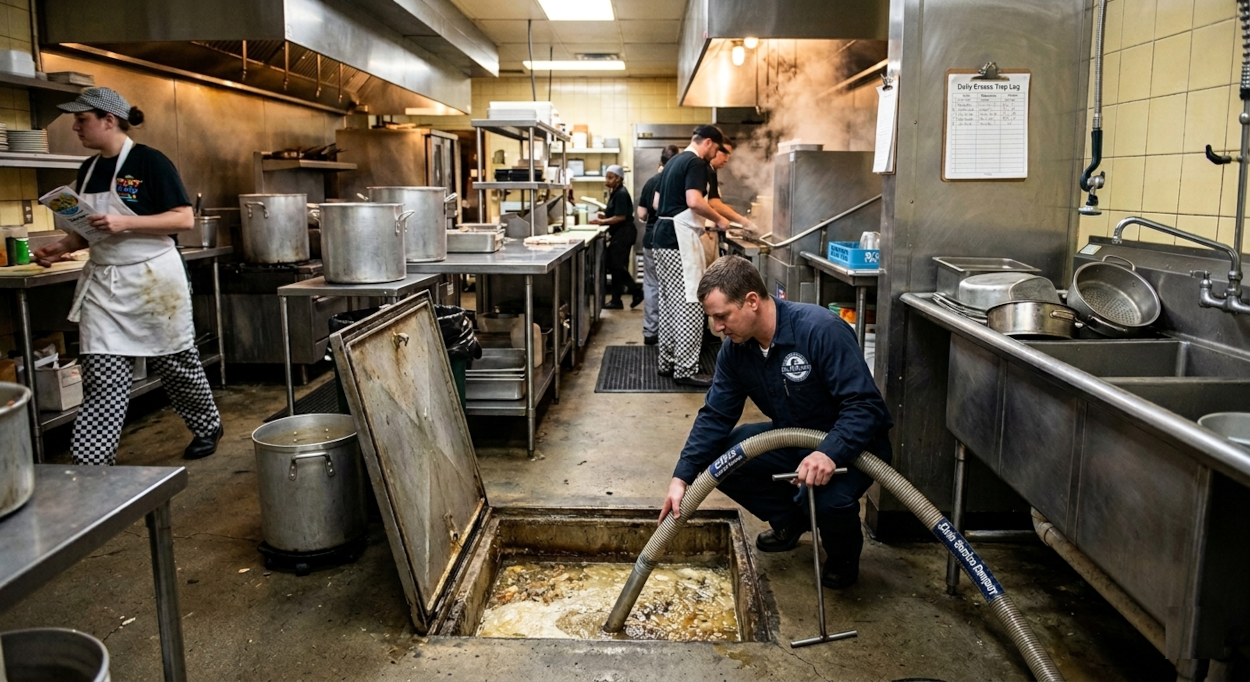
A grease trap overflow is a true emergency. It can lead to health department violations, hefty fines from the city of Wilmington, NC, and even temporary closure of your business. Overflows happen when the primary tank is so full of solidified grease that incoming wastewater has nowhere to go but up and out.
Identifying the Symptom
Visible sludge escaping from the manhole or grease leaking across the kitchen floor. At this stage, the system has completely failed.
How to Avoid It
Adhere to a Schedule: Work with a professional service to establish a recurring maintenance calendar based on your kitchen’s specific volume.
Monitor Grease Levels: Use a “sludge judge” or a similar measuring tool weekly to track how fast your FOG layer is growing.
5. Crossover and Baffle Failures
Internal components, like baffles, are designed to direct the flow of water and keep grease trapped in the first compartment. If these metal or plastic walls corrode or break, grease “crosses over” into the secondary chamber and escapes into the municipal sewer line.
Identifying the Symptom
You might not see this problem in your kitchen, but the city will see it in their pipes. If your local utility department notifies you of high grease levels in the external lines, your internal baffles have likely failed.
How to Avoid It
Professional Inspections: During every pump-out, ask your technician to visually inspect the baffles for signs of corrosion or structural integrity.
Avoid Harsh Chemicals: Excessive use of bleach or strong acid drain cleaners can eat away at the materials inside your grease trap.
Essential Grease Trap Maintenance Tips
To keep your kitchen running smoothly from Georgetown, SC to Wilmington, follow these best practices:
-
Keep a Maintenance Log: Document every cleaning. This is often required for health inspections and helps you predict when the next service is needed.
-
No “Degreasers” in the Drain: Chemicals that claim to “dissolve grease” often just liquefy it long enough to pass through your trap and clog the city’s main lines, which can lead to massive fines.
-
Recycle Your Oil: Keep your yellow grease (fryer oil) completely separate from your grease trap (brown grease). Use a dedicated recycling bin for fryer oil.
-
Hire Local Experts: Choose a service provider familiar with the local regulations in the Carolinas to ensure you stay compliant.
When to Call a Professional
While your staff can handle the daily scraping and straining, a professional should always handle the pumping and internal repairs. If you experience a complete backup, a persistent foul odor that won’t go away, or a “failed” inspection notice from the city, it’s time to call in the experts. Maintaining your grease trap isn’t just about plumbing; it’s about protecting your bottom line and your reputation in the community.
Don’t let a preventable backup shut down your kitchen. For reliable, professional grease trap cleaning and maintenance throughout Wilmington, NC, Andrews, and Georgetown, SC, trust the experts who understand local restaurant needs. Contact us today to schedule your service and keep your drains flowing freely.
Sorry, the comment form is closed at this time.