
06 Jan Eco-Friendly Septic System Habits: What You Can & Can’t Flush
Living along the beautiful coast of Myrtle Beach, SC, means enjoying a unique landscape where the land meets the sea. For many homeowners in the Grand Strand and surrounding areas like Conway SC and Little River, this lifestyle comes with the responsibility of managing a private septic system. Unlike a city sewer, a septic system is a delicate, living ecosystem that relies on natural biological processes to treat wastewater.
Adopting eco-friendly septic care isn’t just about avoiding a messy backyard backup; it’s about protecting our local groundwater and the coastal environment we call home. In this guide, we’ll break down exactly what you should (and shouldn’t) be sending down your drains to keep your system—and our community—healthy.
The “Golden Rule” of the Septic System
To understand why certain habits are harmful, you first need to know how your tank works. Inside your septic tank, “good” bacteria live and breathe. These microorganisms are the heavy lifters, breaking down organic solids and turning them into liquid effluent that safely filters through your drainfield.
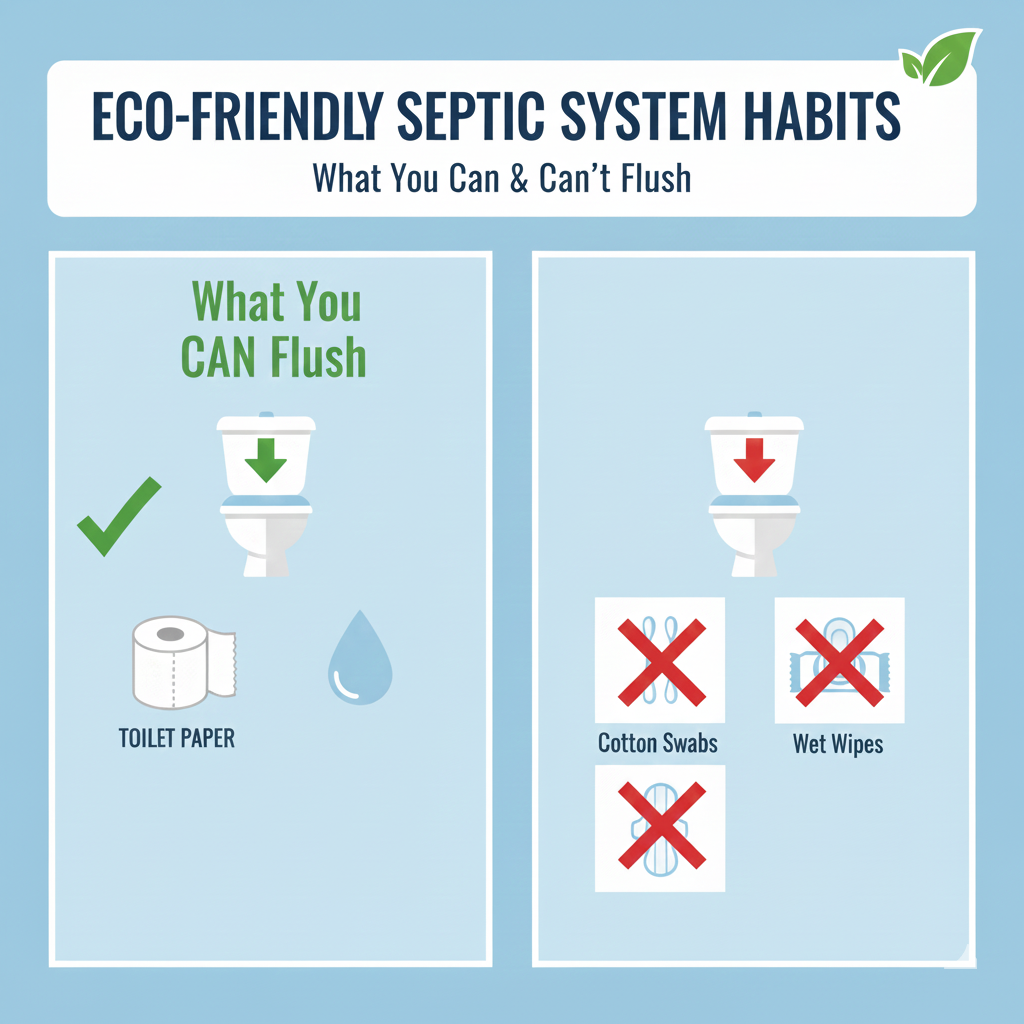
When you introduce foreign objects or harsh chemicals, you either create a physical blockage or “kill” the bacteria that keep the system running. The most important rule for any Myrtle Beach homeowner is this: The only things that should ever be flushed are human waste and toilet paper.
The Dirty List: What Not to Flush Down Toilet Septic
Many products marketed as “convenient” are actually a nightmare for septic owners. Even if a package says “flushable,” it rarely is. Here is a definitive list of what not to flush down toilet septic systems:
-
“Flushable” Wipes: These are arguably the #1 cause of septic failures in Horry County. Unlike toilet paper, these wipes do not dissolve quickly. They snag on pipes and accumulate in the tank, leading to expensive emergency pump-outs.
-
Feminine Hygiene Products: Pads and tampons are designed to absorb moisture and expand. In a septic tank, they never break down and will quickly clog your inlet pipes.
-
Paper Towels and Tissues: These are made of sturdier fibers than toilet paper and will not disintegrate in your tank.
-
Cigarette Butts and Dental Floss: These synthetic materials never decompose and can wrap around moving parts (like pumps) or create “nests” that trap other waste.
-
Medications: Never flush expired pills. Antibiotics, in particular, can wipe out the beneficial bacteria in your tank, halting the treatment process entirely.
Kitchen Habits: The Truth About the Disposal
In the kitchen, the most common point of confusion is the sink. While a garbage disposal septic system setup is possible, it requires extra vigilance.
A garbage disposal grinds food into fine particles, but those particles are still solids that end up in your tank. For a septic system, food waste is much harder to break down than human waste. If you use your disposal frequently, you are significantly increasing the “sludge” layer in your tank, which means you will need to schedule pumping much more often.
Better Alternatives for the Grand Strand: Instead of using the disposal, consider composting your vegetable scraps or simply scraping plates into the trash. Most importantly, never pour fats, oils, or grease (FOG) down the drain. In our warm South Carolina climate, grease might stay liquid for a moment, but it will eventually solidify in your pipes or form a thick “scum” layer in your tank that prevents proper aeration.
Choosing Septic Safe Cleaning Products
The products you use to scrub your floors and wash your clothes eventually end up in your backyard. Harsh chemicals like bleach, ammonia, and high-phosphate detergents act like poison to your septic bacteria.
To practice true eco-friendly septic care, look for labels that explicitly state the product is “Septic Safe” or “Biodegradable.”
What to look for:
-
Phosphate-Free: Excess phosphates can leak into the soil and eventually reach our local waterways, contributing to harmful algae blooms in the Waccamaw River or the Intracoastal Waterway.
-
Natural Cleaners: Distilled white vinegar, baking soda, and lemon juice are excellent, septic safe cleaning products that effectively disinfect without killing your tank’s microbiome.
-
Liquid Laundry Detergent: Powdered detergents can sometimes clump together if the water isn’t hot enough, creating “stones” in your tank. Liquid versions are generally safer for the system.
Responsible Water Usage
Your septic system has a limited capacity for how much liquid it can process at once. This is known as the “hydraulic load.” If you send too much water into the tank too quickly—such as running three loads of laundry while someone is showering—the water doesn’t have time to settle. This “pushes” untreated solids out of the tank and into your drainfield, which can cause permanent damage to the soil.
Tips for Conserving Water in Myrtle Beach:
-
Spread Out Laundry: Instead of a “Laundry Day” on Sunday, do one load every other day.
-
Fix Leaky Toilets: A single running toilet can dump hundreds of gallons of extra water into your system every week.
-
Low-Flow Fixtures: Installing high-efficiency showerheads and toilets is one of the easiest ways to reduce the strain on your drainfield.
The Importance of Professional Maintenance
Even with perfect habits, every septic system needs professional attention. In the sandy soils of Myrtle Beach and the surrounding coastal plains, proper drainage is vital. Over time, sludge naturally builds up at the bottom of the tank.
At Elvis Service Company, we recommend that most residential septic tanks be inspected every 1–2 years and pumped every 3–5 years. If you use a garbage disposal or have a large family, you may need to pump more frequently.
A Healthy Septic System Starts With You
By being mindful of what not to flush down toilet septic lines and switching to septic safe cleaning products, you are extending the life of your plumbing and protecting the local environment. Eco-friendly septic care isn’t just a trend; it’s a necessary part of coastal living that saves you money in the long run.
Is it time for your system’s check-up? Whether you’re in Myrtle Beach, North Myrtle Beach, or Florence, the experts at Elvis Service Company are here to help. From routine pumping to system inspections, we ensure your home stays running smoothly. Contact us today!
Sorry, the comment form is closed at this time.