

14 May Septic System Alarms: What Do They Mean?
For many homeowners in the Myrtle Beach SC and Grand Strand area, the septic system is a “set it and forget it” part of the home and septic services are a unwelcome service. However, that mindset changes instantly the moment a loud, piercing beep begins echoing from the yard or the garage. If you find yourself asking, “why is my septic alarm beeping?”, you aren’t alone.
A septic alarm is a critical safeguard designed to protect your home from messy and expensive backups. In coastal South Carolina, where high water tables and heavy seasonal rains can put extra stress on wastewater systems, understanding these signals is essential for every property owner.
The Purpose of Your Septic Alarm
Most modern septic systems, especially those that use a pump to move effluent to a drain field or an aerobic treatment unit, are equipped with an alarm panel. This panel serves as the communication hub between your underground tank and your home.
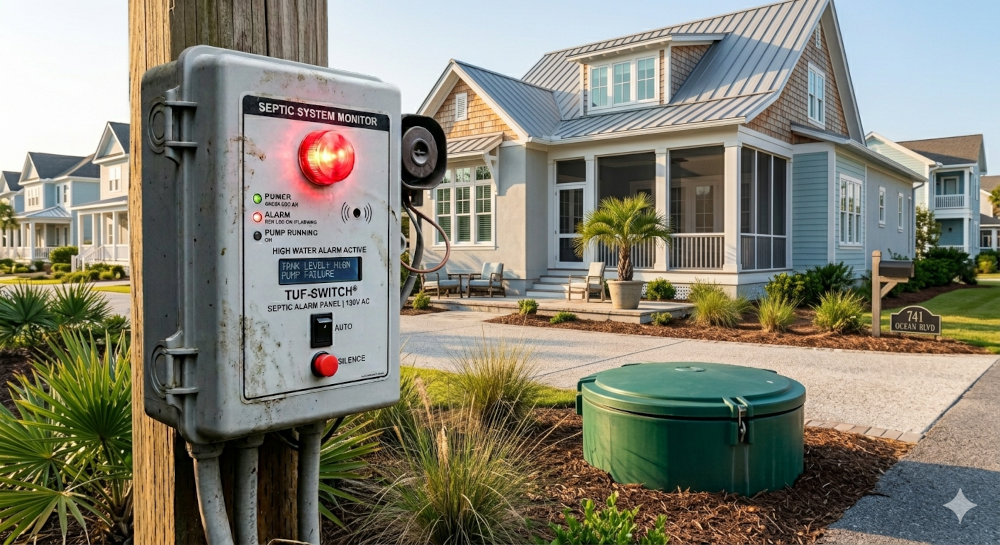
When the septic alarm is going off, it typically indicates one of two things: the water level in the tank is too high, or there is a mechanical failure within the system. According to industry data, nearly 95% of septic system failures can be prevented with regular maintenance and early intervention when an alarm first sounds. Ignoring that red light can lead to environmental contamination and repair bills totaling thousands of dollars.
Common Types of Septic Alarms
To effectively manage a “code red” situation, you must first identify what the system is trying to tell you.
1. High Water Alarm
This is the most frequent reason for an alarm. Inside your tank, a “float switch” sits on top of the liquid. If the liquid rises above a predetermined safety level, the float tips upward, triggering the alarm.
-
Causes: Heavy rain saturating the ground in Myrtle Beach, a plumbing leak (like a running toilet), or a surge in water usage (doing five loads of laundry in one day).
Pump Failure
In systems where gravity isn’t enough to move waste, a submersible pump does the heavy lifting. If the pump stops working due to an electrical short, a clogged intake, or simple old age, the water will rise until the alarm triggers.
Aerator Failure (Aerobic Systems)
If you have an aerobic treatment unit (ATU), the alarm might trigger if the air compressor stops working. These systems rely on oxygen to break down waste; without the aerator, the biological process fails.
What to Do When the Septic Alarm Sounds
The moment you hear that beep, don’t panic—but do take immediate action. Here is a step-by-step guide to septic alarm troubleshooting:
Silence the Alarm
Most panels have a “Silence” or “Reset” switch on the bottom or side. This will stop the noise, but the red light on the septic tank panel will likely remain lit. This light stays on as a visual reminder that the underlying problem hasn’t been fixed.
Stop All Water Usage
This is the most important step. Treat your home as if it is under a “water fast.” Do not run the dishwasher, do not start the laundry, and keep showers as brief as possible. If the tank is full, every gallon you send down the drain increases the risk of a backup into your tubs or sinks.
Check the Breakers
Go to your home’s main electrical panel and the septic control box. Ensure the “Pump” and “Alarm” breakers haven’t tripped. If a breaker has tripped, flip it back on once. If it trips again immediately, do not force it; this indicates a short circuit or a motor issue.
Inspect the Tank (Visual Only)
If you can safely see your tank lids, check for signs of surfacing water or lush, soggy grass around the area. Do not attempt to open the tank lids yourself, as septic tanks contain hazardous gases.
Why is My Septic Alarm Beeping? Potential Causes
Beyond mechanical failure, several factors specific to the South Carolina coast can trigger your system:
Groundwater Infiltration
After a heavy coastal storm, the soil in areas like Conway or Longs can become saturated. If your tank has a small crack or an unsealed riser, groundwater can seep in, artificially raising the water level.
Power Outages
If the power goes out in Myrtle Beach, your pump stops working, but you might still be using water (if you are on a well with a pressure tank or city water). When the power returns, the system realizes the level is too high and sounds the alarm.
Clogged Filters
Many systems have an effluent filter at the outlet tee. If this filter is clogged with grease or non-flushable items (like “flushable” wipes), water cannot exit the tank, causing it to back up.
When to Call a Professional
While silencing a beep is easy, fixing the root cause usually requires professional tools and expertise. You should call Elvis Service Company immediately if:
-
The alarm sounds again within 24 hours of being silenced.
-
You notice foul odors inside the home or near the tank.
-
Drains are gurgling or running slowly.
-
The red light stays on despite checking the breakers.
A professional technician can perform a “draw-down” test to see if the pump is moving water at the correct rate and check the amperage of the motor to predict potential burnout.
Preventing Future Alarms
The best way to handle a septic alarm going off is to prevent it from happening in the first place.
Watch What You Flush
Only human waste and toilet paper should go down the drain. Wipes, feminine products, and paper towels are leading causes of pump clogs.
Spread Out Laundry
Avoid “Laundry Day.” Space out your loads throughout the week to give the drain field time to process the liquid.
Schedule Inspections
Having your tank pumped and inspected every 3 to 5 years is the golden rule of septic health.
Reliable Septic Support in Myrtle Beach
At Elvis Service Company, we understand that a septic alarm is more than just a loud noise—it’s a threat to your home’s comfort and safety. We’ve been serving the Myrtle Beach, Florence, and Wilmington areas for decades, providing the expert care needed to keep your system running smoothly.
Don’t wait for a backup to turn a minor alarm into a major disaster. If your red light is on or you’re worried about your system’s performance, contact us today to schedule a professional inspection. We’re here to ensure your septic system stays out of sight and out of mind.
Sorry, the comment form is closed at this time.