
21 Jul How to Choose the Best Grease Trap Cleaning & Pumping Service
Maintaining a compliant commercial kitchen requires a dependable network of facility vendors. Among these partners, few impact daily continuity as heavily as the company managing your waste interceptors.
A single structural plumbing backup can shut down food service operations, ruin customer goodwill, and invite devastating local health department penalties. Choosing a vendor is a foundational business security decision.
Industry research shows that the average restaurant faces significant risk from poor waste practices. Data gathered by the National Restaurant Association indicates that roughly 65% of all commercial kitchen drainage failures are tied directly to improper grease management or delayed interceptor pumping cycles.
Faced with dozens of regional options, distinguishing between standard operations and premier providers requires a structured evaluation framework. This strategic roadmap details how to screen grease trap cleaning companies to locate a provider that protects your plumbing, compliance record, and bottom line.
Verifying Essential Licenses and Regulatory Compliance
The absolute baseline for onboarding a wastewater vendor is proper administrative vetting. Every municipality enforces distinct legal parameters regarding who can handle, transport, and log commercial food waste.
Never take a vendor at their word when they promise they possess the required operational credentials. A professional partner should transparently share their up to date state and municipal documentation upon request.
Working with an uncertified contractor carries severe corporate liabilities. If an unlicensed team illegally dumps your kitchen interceptor contents into a local storm drain, your business remains legally vulnerable under corporate environmental tracking statutes.
Securing a certified, licensed grease trap service guarantees that all waste manifests are properly processed, keeping your brand safe from heavy local municipality code enforcement actions.
Technical Experience and Staff Expertise
Wastewater infrastructure differs drastically across diverse commercial spaces. A small, under sink interceptor at a neighborhood bakery requires vastly different strategic handling than a multi thousand gallon dual chamber concrete vault buried outside a busy hotel kitchen.
When screening candidates, ask detailed questions about their history with your specific industry niche. High volume steak houses, industrial food manufacturing plants, and fast food chains all possess unique waste generation profiles.
Experienced grease trap professionals understand the distinct structural nuances of diverse interceptor designs. They know how to handle delicate internal parts, spot deteriorating concrete walls early, and identify failing baffling systems before a systemic failure occurs.
Fleet Capacity and Advanced Fleet Gear
A service provider is only as dependable as the equipment they bring to your commercial property. A small, underpowered pump assembly cannot thoroughly clear out thick, deeply settled sludge layers inside a large outdoor commercial vault.
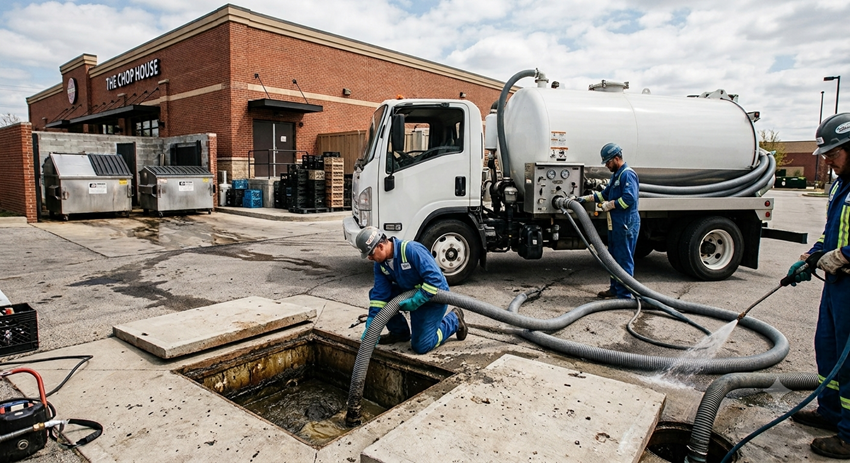
Inquire about the technical capabilities of the provider fleet. Top tier teams deploy high capacity vacuum trucks capable of generating the immense suction needed to empty thick waste layers.
They should also provide advanced secondary services like high pressure hydro jetting lines. This tool is vital for scouring hardened grease buildup off internal pipe walls, keeping your lines completely clear.
Finding a Scheduling Model That Protects Your Operations
A SC grease trap pumping service should never disrupt your guest dining experience or daily kitchen prep work. Bringing heavy vacuum hoses through a kitchen during peak hours is a recipe for operational chaos.
Look for a partner that offers complete scheduling flexibility. The best grease trap service teams work quietly during your off peak hours, arriving late at night or early in the morning before the kitchen lines heat up.
Consistent scheduling prevents your system from violating the standard 25 percent capacity rule. A professional provider will evaluate your weekly grease output and build a custom service calendar, taking the guesswork out of ongoing facility compliance.
Transparent Pricing Structures Over Cheap Estimates
In the commercial waste space, picking the absolute lowest bid usually leads to costly long term headaches. Low cost providers often use shortcut tactics, like skimming the floating top layer of grease while leaving heavy solid sludge layers untouched at the bottom.
Demand comprehensive, itemized pricing quotes. The proposal should clearly cover all primary pumping labor, waste disposal fees, scraping steps, and tracking paperwork administration.
Watch out for hidden fees like unexpected fuel surcharges, environmental disposal surcharges, or extra fees for basic pipe wall scraping. Transparent, flat rate service structures indicate a reliable partner who stands firmly behind their work.
24/7 Emergency Support Infrastructure
Even with meticulous preventive care, unexpected kitchen plumbing surprises can happen. An unpredicted surge in business volume or an accidental flush of inappropriate materials can create a sudden mainline backup.
When drains begin overflowing on a busy Saturday night, you cannot afford to wait for standard Monday morning office hours. You need an established partner with a responsive emergency line.
Confirm that the company utilizes dedicated, in house technicians for emergency calls rather than outsourcing to random third party contractors. Rapid response times minimize costly business downtime and protect your property from water damage.
Environmental Disposal and Sustainability Standards
What happens to your kitchen waste after the vacuum truck leaves your property matters. Eco conscious disposal is an important corporate responsibility goal for modern food service brands.
Inquire directly about the vendor eco disposal protocols. Avoid companies that simply haul waste to traditional landfills where it breaks down into harmful greenhouse gases.
Leading organizations prioritize sustainable reuse networks. They transport collected organic material to advanced anaerobic digestion facilities or dedicated composting centers where it is converted into clean biogas energy or nutrient rich agricultural fertilizer.
Selecting Your Long Term Commercial Kitchen Partner
Choosing a waste vendor is an investment in your restaurant day to day operational safety. By prioritizing certified licensing, robust fleet gear, transparent pricing, and off hours scheduling, you protect your kitchen from unexpected line failures.
If you want to experience the peace of mind that comes from working with a premier regional provider, explore the specialized commercial solutions available at Elvis Service Company.
The dedicated team at Elvis Service Company provides comprehensive pumping, scraping, and documentation support to keep your facility fully compliant. Contact the specialists at Elvis Service Company today to secure an optimized service schedule tailored to your business needs.
Sorry, the comment form is closed at this time.